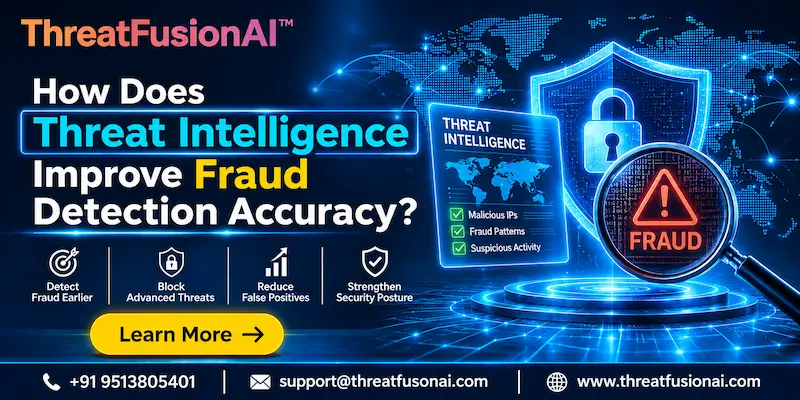
Do you know what threat intelligence is and how it offers help in improving fraud detection accuracy for organizations in the IT Industry? If not, then you are in the right place. Here, we will talk about what threat intelligence is and related benefits in detail.
Moreover, we will introduce you to a reliable threat intel solution offered by a reputable VAPT service provider. What are we waiting for? Let’s get started!
What is threat intelligence?
In order to comprehend possible security concerns, threat intelligence is compiled and examined data regarding existing and new cyberthreats, attacker motivations, targets, and operational techniques.
Organizations may proactively detect vulnerabilities, improve defensive security controls, and respond to incoming cyberattacks more quickly by converting raw data into actionable information.
In the end, it transforms company cybersecurity into an intelligent, proactive protection strategy rather than a reactive one. Let’s explore what threat intelligence is and how it helps businesses improve fraud detection accuracy!
Key Types of Threat Intelligence Used in Fraud Prevention
|
S.No. |
Types |
What? |
|
1. |
Strategic Threat Intelligence |
Financial risk profiles and high-level trends for executive decision-making. |
|
2. |
Tactical Threat Intelligence |
To find new fraud pathways, certain attacker TTPs are employed. |
|
3. |
Operational Threat Intelligence |
Useful information on potential fraud schemes and actor skills. |
|
4. |
Technical Threat Intelligence |
Certain signs of compromise, such as phishing domains and rogue IPs. |
|
5. |
Fraud-Specific / Identity Intelligence |
PII that was obtained from dark web markets and credentials that were stolen. |
Dark Web Monitoring and Cybercrime Forum Intelligence
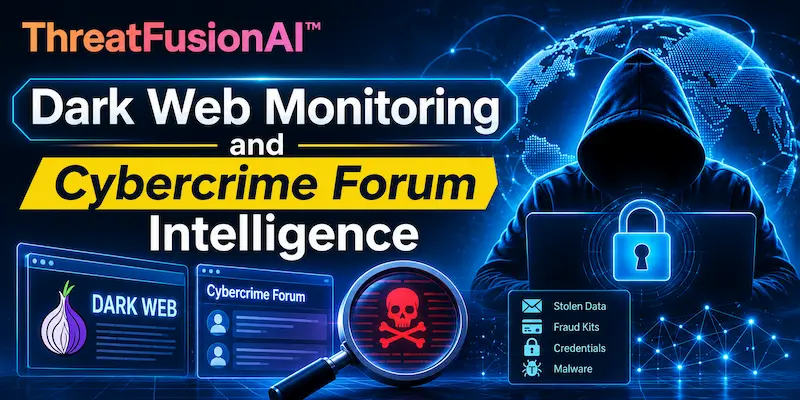
In order to find compromised company passwords, stolen PII, and illegally distributed malware toolkits, dark web monitoring and cybercrime forum intelligence regularly watch underground marketplaces, encrypted chat channels, and hacker forums.
Organizations may proactively revoke exposed access, block developing attack vectors, and stop account takeover fraud before financial or operational harm happens by detecting leaked data and planned attacks early.
Understanding the Relationship Between Threat Intelligence and Fraud Detection
Fraud detection systems can identify hostile infrastructure, stolen credentials, and changing attack patterns in real time thanks to threat intelligence, which provides actionable context. Through this combination, fraud prevention becomes a proactive defense against coordinated cybercrime campaigns rather than a reactive examination of individual transactions.
How Threat Intelligence Improves Fraud Detection Accuracy?
|
S.No. |
Factors |
How? |
|
1. |
Enriches Transaction Context with Real-Time Data |
Connects transaction events to compromised device fingerprints, proxy networks, and known malicious IPs. |
|
2. |
Detects Stolen Credentials Before Misuse |
Prevents criminals from taking over accounts by flagging compromised login pairs obtained from dark web dumps. |
|
3. |
Reduces False Positives for Legitimate Users |
Improves risk scoring criteria to differentiate real high-risk fraud vectors from benign abnormalities. |
|
4. |
Accelerates Pattern Recognition for Evolving Tactics |
Updates detection logic in advance of attacks by identifying new social engineering and botnet strategies. |
|
5. |
Powers Automated Policy Enforcement |
Uses real-time threat indicators to initiate fast step-up authentication, step-down limitations, or account freezes. |
Best Practices for Improving Fraud Detection Accuracy with Threat Intelligence
The following are the best practices for improving fraud detection accuracy with threat intelligence:
Automate Real-Time Intelligence Ingestion:
To immediately stop active fraudulent vectors, incorporate API-driven threat feeds straight into fraud engines.
Prioritize High-Fidelity, Fraud-Specific Feeds:
Prioritize curated dark web, mule network, and credential-leak data over general technical indicators.
Continuously Tune Risk Scoring Models:
To avoid rule decay and false positives, periodically adjust judgment thresholds using new threat context.
Enforce Cross-Functional Collaboration:
Align risk officers, fraud teams, and SOC analysts to consolidate threat visibility and cross operational silos.
Establish a Continuous Feedback Loop:
To train detection logic against new strategies, feed verified fraud outcomes back into intelligence channels.
Key Metrics to Measure Threat Intelligence ROI in Fraud Prevention
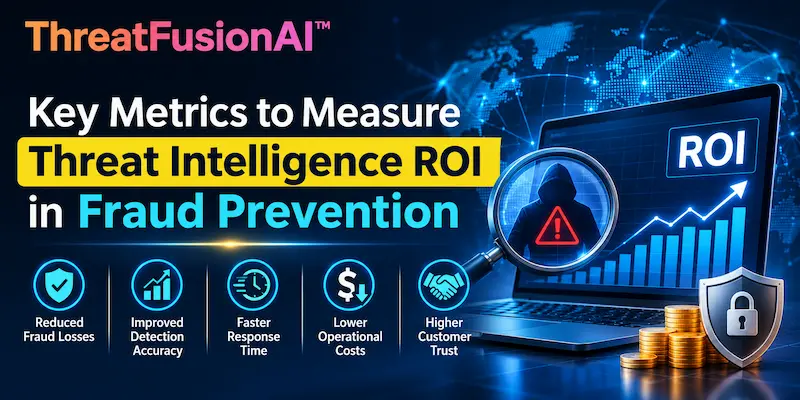
The following are some key metrics to measure threat intelligence ROI in fraud prevention:
Reduction in Direct Fraud Loss:
Measures the net financial capital saved by preventing fraudulent payouts, chargebacks, and account takeovers.
Decrease in False Positive Rate:
Maintains consumer experience and reduces operational friction by tracking the percentage decrease in false alerts on valid customer transactions.
Time-to-Detect (TTD) & Time-to-Respond (TTR):
Measures the speed at which the security team finds and stops active fraud campaigns before significant harm is done.
Fraud Alert Precision & Conversion:
Determines the percentage of warnings generated by threat intelligence that correspond to verified, actionable fraud attempts.
Operational Efficiency & Review Velocity:
Evaluates how enriched, automated threat context reduces the number of manual review hours required per analyst.
Future of Threat Intelligence in AI-Powered Fraud Detection
The future of threat intelligence in AI-powered fraud detection is focused on dynamic, predictive automation that uses federated learning and graph neural networks to ingest real-time threat data and identify deepfake fraud rings and zero-day synthetic identities across institutions.
Autonomous AI models continuously modify risk thresholds and behavioral biometrics on the go instead of depending on past regulations, preventing sophisticated social engineering and automated bot campaigns before transactions are finalized.
Conclusion
Now that we have talked about what threat intelligence is and how it helps in reducing fraud, you might want to get your hands on a dedicated threat intel solution. For that, you can go for ThreatFusionAI, a dedicated threat intelligence platform offered by Craw Security.
ThreatFusionAI helps organizations in reducing online frauds by notifying about the latest cyber threats and malicious risks so that they can enhance their security solution beforehand. What are you waiting for? Contact, Now!
Frequently Asked Questions
About threat intelligence
1. What is threat intelligence in fraud detection?
Threat intelligence in fraud detection refers to actionable, real-time context on hostile infrastructure, stolen credentials, and developing threat techniques that are utilized to proactively detect and stop fraudulent conduct before money is lost.
2. How does threat intelligence improve fraud detection accuracy?
Threat intelligence improves fraud detection accuracy in the following ways:
a) Enriches Live Transaction Context,
b) Detects Compromised Credentials Early,
c) Minimizes False Positives for Legitimate Users,
d) Accelerates Recognition of Evolving Tactics, and
e) Triggers Automated Adaptive Controls.
3. What types of threat intelligence help prevent fraud?
Threat intelligence helps prevent the following types of fraud:
a) Strategic Threat Intelligence,
b) Tactical Threat Intelligence,
c) Operational Threat Intelligence,
d) Technical Threat Intelligence, and
e) Fraud-Specific / Identity Intelligence.
4. How does threat intelligence identify suspicious transactions?
Threat intelligence identifies suspicious transactions in the following ways:
a) Cross-References Telemetry with Malicious Infrastructure,
b) Flags Stolen Credentials and Session Tokens,
c) Recognizes Known Device Fingerprints and Botnets,
d) Detects Synthetic and Mule Account Behaviors, and
e) Maps Behavioral Anomalies to Known Attacker TTPs.
5. Can threat intelligence reduce false positives in fraud detection?
Yes, threat intelligence lowers false positives by giving fraud engines precise risk context, such as verified malicious IPs, proxy networks, and dark web credential dumps, which enables them to differentiate between legitimate security threats and innocuous consumer oddities.
6. How does real-time threat intelligence prevent financial fraud?
Real-time threat intelligence prevents financial fraud in the following ways:
a) Blocks Account Takeover (ATO) Instantly,
b) Identifies Malicious Infrastructure at Checkout,
c) Neutralizes Zero-Day Synthetic Identity & Bot Attacks,
d) Enables Dynamic Step-Up Authentication, and
e) Disrupts Money Mule Networks.
7. How does threat intelligence help detect emerging fraud patterns?
Threat intelligence helps detect emerging fraud patterns in the following ways:
a) Monitors Dark Web Markets and Underground Forums,
b) Tracks shifts in Attacker Tactics, Techniques, and Procedures (TTPs),
c) Aggregates Cross-Industry Attack Telemetry,
d) Uncovers Synthetic Identity and Account Farming Rings, and
e) Feeds Machine Learning and Predictive Risk Models.
8. What role does AI play in threat intelligence and fraud detection?
AI plays the following role in threat intelligence and fraud detection:
a) Automates High-Volume Data Aggregation and Enrichment,
b) Predicts Zero-Day Fraud and Behavioral Anomalies,
c) Enhances Synthetic Identity and Mule Ring Detection,
d) Combats Automated Botnets and Deepfake Attacks, and
e) Drives Real-Time Dynamic Risk Scoring and Response.
9. How can businesses integrate threat intelligence into fraud detection systems?
Businesses can integrate threat intelligence into fraud detection systems in the following ways:
a) Deploy API-Driven Real-Time Feed Ingestion,
b) Embed Context into Dynamic Risk Engines,
c) Automate Orchestration and Response Playbooks,
d) Bridge Security Operations (SOC) and Fraud Teams, and
e) Establish a Continuous Feedback Loop.
10. What are the key benefits of using threat intelligence for fraud prevention?
The following are the key benefits of using threat intelligence for fraud prevention:
a) Proactive Fraud Prevention,
b) Reduced Direct Financial Losses,
c) Improved Detection Accuracy & Fewer False Positives,
d) Faster Incident Response & TTR, and
e) Enhanced Resilience Against Novel Attacks.